Are Home Security Systems Worth It? A Homeowner’s Guide
| PHT Security Team
Short answer: For most homeowners, yes. A security system usually costs less than a monthly streaming bundle, lowers your odds of getting burglarized, and can shave something off your homeowners insurance too. But “worth it” does not mean the exact same thing for every household. The math shifts depending on where you live, whether you own or rent, and honestly, how much the risk actually keeps you up at night.
So let us get into it: what the data actually shows, what a system realistically costs in 2026, and how to figure out whether one makes sense for your specific home.
How Often Do Break Ins Actually Happen?
The good news first: burglary rates have been dropping for years. According to the FBI Crime Data Explorer, break ins fell by roughly 19% in the first half of 2025 compared to the year before, part of a downward trend building for a decade. That said, hundreds of thousands of homes still get hit annually, and depending on which recent report you check, a burglary happens somewhere in the U.S. every 26 to 51 seconds.
Two numbers here matter far more than the national total:
- Target Selection: A home without a visible security system is roughly three times more likely to be targeted than one with active protection.
- The Adoption Gap: Only about half of U.S. households currently have any security system at all, placing the remaining 50% squarely in the easier target category.
The timing might catch you off guard, too. Break ins are not primarily a nighttime crime, contrary to what movies suggest. A large share happen during the day, often between late morning and mid afternoon, right when houses tend to sit empty because everyone is at work or school.
What a Security System Actually Does
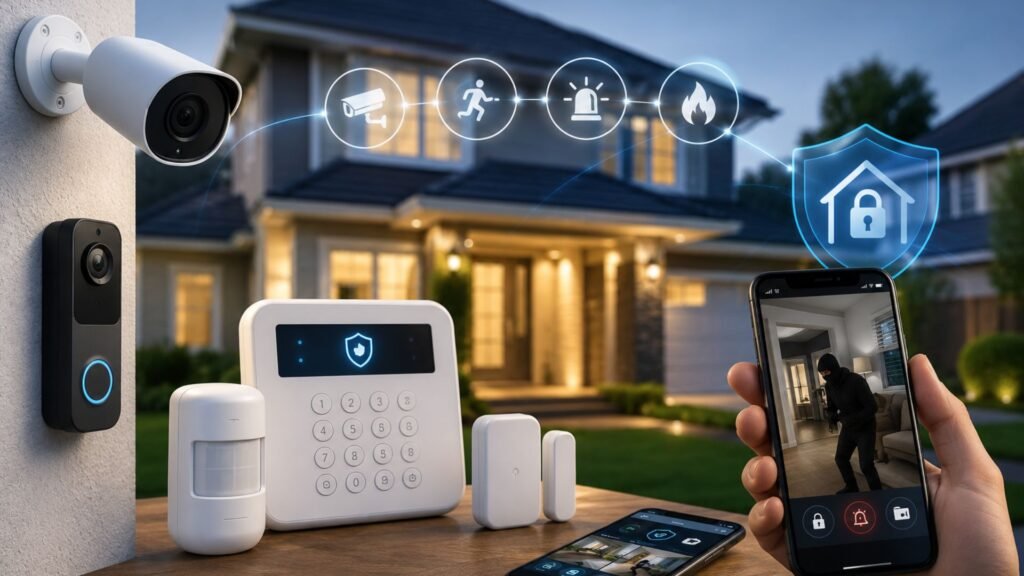
It helps to break this down into three separate jobs, because many homeowners focus on just one and miss the broader picture.
- Deterrence: This is arguably the biggest piece of the puzzle. Yard signs, visible cameras, and smart doorbells signal that a house is more trouble than it is worth. Most burglars are not looking for a confrontation; they are scouting for whichever house on the block looks easiest to enter unnoticed.
- Detection: Door and window sensors, motion detectors, and glass break monitors catch an intrusion the second it starts, rather than leaving you to piece together what happened after the fact.
- Response: This is where active monitoring earns its keep. A monitored system alerts a dedicated call center so someone can verify the event and dispatch emergency services fast. Speed is everything here, considering most burglaries wrap up in just a few minutes.
Plenty of modern setups throw in smoke and carbon monoxide detection on top of all this, stretching the system’s value well beyond simple theft prevention into everyday environmental safety.
Do Burglars Actually Get Deterred by Alarms?
There is solid research behind this, and it tracks cleanly with common sense.
One widely cited University of North Carolina study on offender behavior found that most burglars actively check for a visible alarm system before even attempting a break in. The majority admitted they would simply move on to a different target if they spotted one. If an alarm goes off mid attempt, most intruders bail immediately rather than pushing through the noise.
So, the value of a security system is not just about catching someone in the act. A massive chunk of its return on investment comes from the break in never happening in the first place, simply because your property looked like more hassle than the house down the street.
How Much Does a Home Security System Cost in 2026?
This is usually where the “worth it” question gets settled, so let us look at the actual numbers. If you want a more detailed, Houston-specific breakdown by provider and neighborhood, our guide to home security cost in Houston covers exactly that.
- Equipment: A basic starter kit runs around $200 to $260. A comprehensive setup with several sensors, multiple cameras, and smart home integration can land anywhere from $600 to $2,500+, depending on the brand and add ons.
- Installation: DIY setups cost $0 in labor, as you handle the mounting and configuration yourself. Professional installation typically costs $99 to $199, though many top providers waive this fee as a promotional incentive.
- Monthly Monitoring: This recurring cost shapes your long term math. Self monitored plans cost under $20 a month (sometimes $0 if you rely purely on push notifications). Professionally monitored plans land between $20 and $60 a month, while premium tiers with live video verification or advanced automation can reach $70 to $99.
Here is a practical breakdown of what you can expect to spend:
| Setup Type | Year 1 Estimated Total | Subsequent Annual Cost |
|---|---|---|
| Mid Range Professional | $500 to $1,000 | $250 to $700 |
| Bare Bones DIY | Under $300 | $0 to $240 |
Note on DIY Costs: Hidden expenses can sneak up on you with low cost DIY gear. Cloud video storage subscriptions, municipal alarm permit fees, and eventual battery or hardware replacements can quietly narrow the price gap between self monitoring and professional services over time.
Does a Security System Lower Your Insurance Bill?
Usually, yes, and this remains one of the most overlooked parts of the value equation.
Most home insurance providers offer a discount for maintaining a monitored security system, generally ranging between 5% and 20% off your annual premium. Some insurers will knock a smaller percentage off for basic smoke and CO detectors alone, with the maximum discounts unlocking once professional video monitoring is integrated.
On a typical $1,500 annual premium, even a modest 10% discount saves you $150 a year. Stretched across years of homeownership, that offset covers a substantial portion of your monitoring bill. It is always worth a quick call to your insurance agent to verify specific discount tiers, as policies vary significantly by carrier and region.
DIY vs. Professional Monitoring: Which One Is Worth It?
Neither option wins universally. They simply serve different living situations and comfort levels.
Choose DIY / Self Monitoring If:
- You prefer zero contracts and total commitment flexibility.
- You are comfortable acting as your own first responder when an alert hits your phone.
- You rent, live in a smaller space, or spend enough time near your phone to catch alerts immediately.
Choose Professional Monitoring If:
- You want a dedicated team watching your home 24/7, regardless of your personal availability.
- You have a busy household (kids, long work shifts, frequent travel) where alerts might easily be missed.
- You do not mind a multi year contract in exchange for total hands off peace of mind.
For Houston homeowners specifically, ADT monitoring services in Houston pair 24/7 professional response with local emergency dispatch familiarity, which makes a real difference when response time actually matters.
The Hybrid Alternative
A popular middle ground has emerged: buy a modular DIY equipment kit, but pay a modest, cancel anytime monthly fee for professional monitoring. Several top budget brands have built their entire business model around this operational sweet spot.
When a Security System Might Not Be Worth It
To be completely realistic, a full security system is not automatically the right move for every living situation:
- Short Term Rentals: If you move frequently and cannot install hardware, a full security kit rarely pays off compared to portable standalone cameras or a basic video doorbell.
- Naturally Secure Environments: If you live in a low crime area, own a vocal dog, have hyper vigilant neighbors, or already use a smart doorbell, you may already enjoy a strong baseline deterrent without paying extra for monthly monitoring.
- Strict Contract Risks: If you move often, getting locked into long term monitoring contracts can lead to steep early termination fees that erase any anticipated savings.
- Outdated Equipment: If you already have a system but it is five or more years old, the smarter move may be to upgrade your home security system rather than continue paying monthly fees for hardware that lacks modern sensors, cellular backup, or smart home integration.
In these scenarios, a scaled down entry setup such as a single video doorbell paired with two entry sensors delivers the bulk of the security benefit for a fraction of the cost.
How to Decide If It Is Worth It for Your Home
Asking yourself these five targeted questions will make your decision clear:
- Is your home left empty for long stretches during the day or throughout the year?
- Will you reliably check phone alerts instantly, or do you need a dispatch team handling that for you?
- Does your homeowners insurance offer a discount large enough to offset your subscription costs?
- Are you comfortable committing to a contract, or do you require monthly flexibility?
- Do you need basic theft prevention, or are environmental safeguards (fire, water leak, CO) equally important?
The Consensus: If your answers lean toward “I am away often and want hassle free protection,” a full residential security system with professional monitoring is worth the investment. If you lean toward “I am home often, prioritizing budget, and want flexibility,” a self monitored DIY setup offers around 80% of the practical benefits at a fraction of the expense.
Frequently Asked Questions
Are home security systems worth the monthly cost?
For most households, yes. The combined impact of visual deterrence, faster emergency dispatch, environmental monitoring, and home insurance discounts generally outweighs a typical $20 to $40 monthly fee, especially for properties left unattended during work hours.
Do fake security cameras work as a deterrent?
They offer minor deterrence against casual opportunists, as most passersby cannot immediately spot a decoy. However, fake cameras provide zero detection, notification, or evidence if someone actually steps onto your property, making them far less reliable than real equipment.
Is a security system worth it in a safe neighborhood?
Yes. Low crime neighborhoods still experience burglaries and package theft. Beyond crime, modern systems add value through fire and carbon monoxide protection, frozen pipe alerts, insurance savings, and remote access to monitor deliveries or visitors.
What is the cheapest way to get meaningful home security?
Installing a smart video doorbell alongside one or two door or window contact sensors on a self monitored plan typically costs under $200 upfront, carries low or zero monthly fees, and covers the primary entry points targeted in most residential break ins.
The Bottom Line
A home security system cannot guarantee your house will never be targeted, but the statistics make a compelling case for installing one. Unprotected homes face significantly higher break in risks, intruders routinely avoid visible alarms, and recurring costs are frequently cushioned by insurance savings.
Whether you go with a fully managed professional system or a flexible DIY kit comes down to your daily schedule, how you prefer to manage alerts, and your budget. If you are in the Houston area and want to compare your options side by side, check out our breakdown of the best home security systems in Houston, TX to see how top providers stack up on price, features, and monitoring quality.
For the vast majority of homeowners, having some form of active protection is well worth it. It is simply a matter of picking the right scale for your needs.

PHT Security Team
We believe everyone deserves to feel safe at home and at work. Our team shares practical security advice, helpful resources, and the latest insights on ADT systems, security cameras, smart home technology, and commercial security to help you make informed decisions. Whether you’re exploring your first security system or upgrading your current setup, we’re here to help you protect what matters most.
PHT Security Team
we believe everyone deserves to feel safe at home and at work. Our team shares practical security advice, helpful resources, and the latest insights on ADT systems, security cameras, smart home technology, and commercial security to help you make informed decisions. Whether you’re exploring your first security system or upgrading your current setup, we’re here to help you protect what matters most.