How Alarm Monitoring Works: Step-by-Step Guide to 24/7 Home Protection
| PHT Security Team
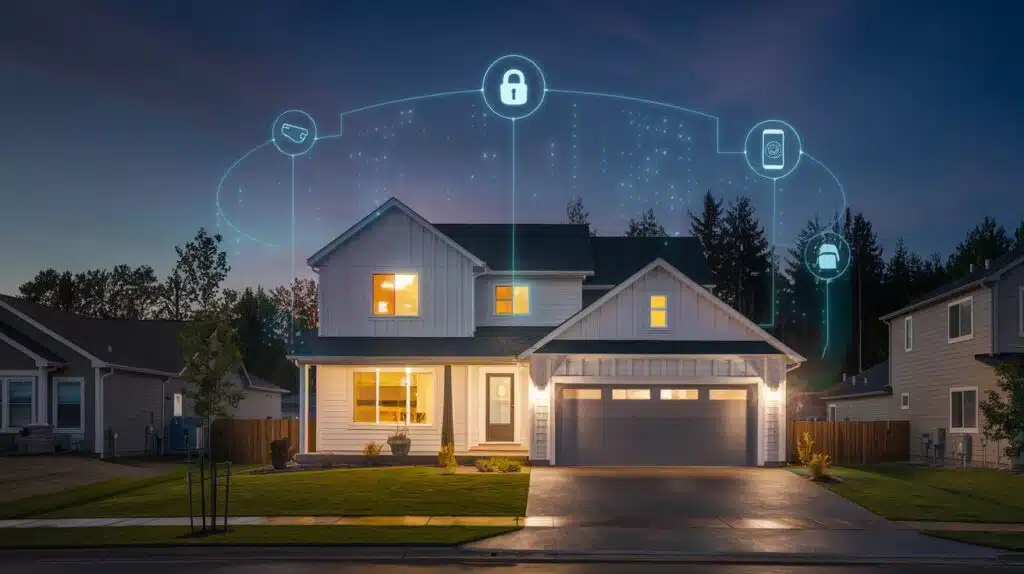
A security system without monitoring is basically a very loud noise machine. It’ll scare off some intruders, sure, but if nobody’s around to hear it, that’s the whole plan. Alarm monitoring is what turns that noise into an actual response: someone reviewing the alert, confirming what’s happening, and getting emergency services moving.
If you’ve ever wondered what’s really happening behind the scenes when your alarm goes off, or you’re just trying to decide whether monitoring is worth the money, here’s the whole thing broken down.
What Is Alarm Monitoring, Exactly?
Alarm monitoring connects your home’s sensors, control panel, and cameras to a professional central station staffed around the clock. When something trips a sensor, the system doesn’t just make noise inside your house. It sends a signal to real people trained to figure out whether it’s an emergency and act on it, often through providers like ADT-backed monitoring, which most Houston homeowners recognize by name.
That’s the real difference between a monitored system and a standalone alarm. A standalone system can scare off a burglar with sound, but it can’t call the police for you, cross-check a smoke reading against a fire signal, or catch rising carbon monoxide levels while you’re asleep.
How Alarm Monitoring Actually Works, Step by Step
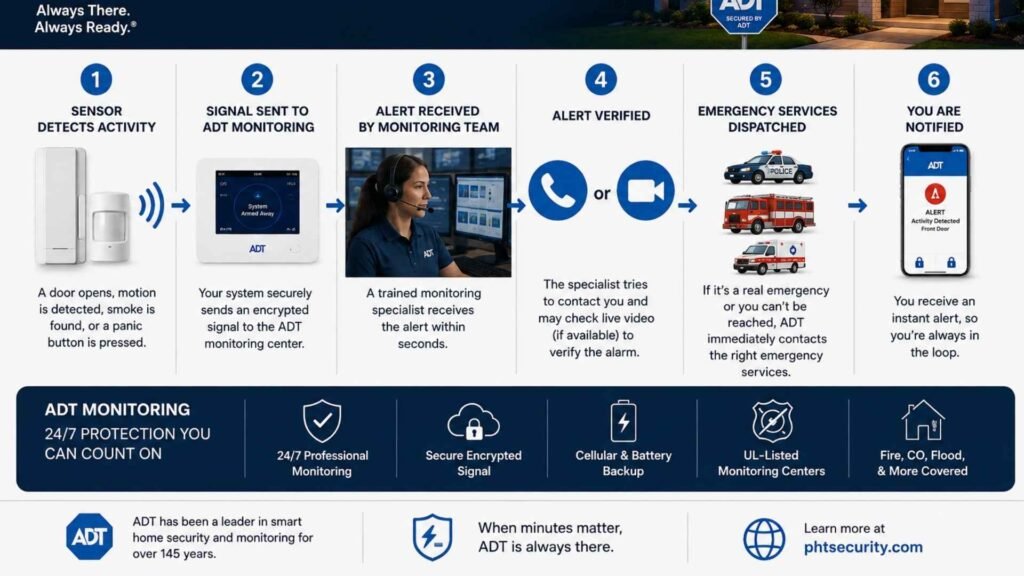
The process looks roughly the same across most providers, even if the exact tech varies a bit.
Step 1: A sensor picks up something unusual. Could be a door or window sensor catching an opening, a motion detector picking up movement, a smoke or CO detector reading dangerous levels, or a glass-break sensor hearing a shattered window.
Step 2: The control panel sends a signal. Your control panel processes the alert and sends it to the monitoring center, usually over a cellular connection these days, though some older setups still lean on landline or Wi-Fi.
Step 3: A monitoring agent reviews it. This is the part a standalone alarm just can’t do. A trained operator sees the signal come in and starts verifying, sometimes with a phone call to your home, sometimes through live video if your system supports it.
Step 4: They try to confirm it’s real. Reach you and it’s nothing, a curious pet, a door left open, whatever, and they cancel the response. Can’t reach you, or you confirm there’s an actual threat, and they move straight to dispatch.
Step 5: Emergency services get contacted. Police for a break-in, fire department for smoke or CO, medical responders for a panic button. The monitoring center handles this so you’re not fumbling through a 911 call mid-crisis.
Step 6: You get notified too. Most systems send you an alert alongside dispatch, so you’re in the loop even if you weren’t the one who caught it first.
The whole thing, trigger to dispatch, typically happens in well under a minute with a reliable provider. That speed is really the entire point.
What Kinds of Emergencies Does Monitoring Actually Cover?
People tend to think of alarm monitoring as strictly a burglary thing. It covers a lot more ground than that.
- Break-ins, through door, window, and motion sensors
- Fire, through smoke detectors that trigger priority dispatch, something covered in more depth in this guide to fire alarm monitoring
- Carbon monoxide leaks, a threat you can’t see or smell, which is exactly why a monitored CO sensor matters
- Flooding and water damage, especially relevant after a burst pipe or a storm surge backing up a drain
- Medical emergencies, through panic buttons or wearable medical alert devices
That last one matters more than people expect. If someone at home has a fall or a medical episode and can’t call for help themselves, a monitored panic button does it for them.
If you’re weighing whether to hand this off to a professional team at all, versus keeping it in-house through your phone, it’s worth reading alarm monitoring vs. self-monitoring, since the two work very differently once an alert actually fires.
What Happens During a False Alarm?
False alarms happen constantly. A gust of wind, a pet setting off a motion sensor, someone forgetting to disarm before opening a door. This is actually where good monitoring earns its keep.
Instead of automatically dispatching police for every trip, a trained operator verifies the signal first, usually with a phone call and a passcode check. That does two things. It saves you from a false alarm fine, since many cities charge for repeated unverified dispatches, and it keeps police response prioritized for alarms that are actually real. Departments in a lot of areas, Houston included, treat verified alarms as higher priority specifically because of that filtering step. The National Fire Protection Association has written extensively about how verified alarm signals shape emergency response priorities, particularly for fire.
The Technology Keeping It Running
A monitoring system is only as good as its weakest connection point, so the tech behind it matters more than most homeowners realize.
Cellular and battery backup. If your internet drops or the power gets cut, whether from a storm or someone trying to disable your system on purpose, cellular backup keeps the signal alive. Texas storms knock out power more often than anyone would like, which makes this less of a nice-to-have and more of a baseline requirement. Newer setups built around wireless fire alarm monitoring are designed specifically around this kind of resilience.
UL-Listed or Five Diamond-certified stations. These are industry certifications meaning the central station meets set standards for staffing, response procedures, and uptime. Not every provider carries them, so it’s worth asking directly.
Smart home integration. Most modern systems let you arm, disarm, and check status remotely through an app. Forgot to set the alarm before leaving for work? Usually fixable from your phone in ten seconds.
Encrypted signal transmission. Older systems relying purely on Wi-Fi are more exposed to signal jamming or a simple outage. Encrypted, cellular-based transmission is a lot harder to interfere with.
Alarm Monitoring vs. a Standalone Alarm
| Feature | Standalone Alarm | Monitored Alarm |
|---|---|---|
| Makes noise on trigger | Yes | Yes |
| Contacts emergency services | No | Yes |
| Watched 24/7 by trained staff | No | Yes |
| Verifies false alarms before dispatch | No | Usually |
| Works during power or internet outage | Rarely | With cellular/battery backup |
A standalone alarm might deter a burglar who doesn’t want to deal with the noise. It won’t call anyone if you’re not home to hear it, and it definitely won’t dispatch a fire department while you’re asleep upstairs.
The Benefits That Go Beyond Catching Break-ins
Lower insurance premiums. Most major insurers offer a discount, often somewhere between 10% and 20%, for homes with monitored systems, since it lowers their risk exposure. The Insurance Information Institute has documented this trend across providers for years, and over a full year, that discount can offset a real chunk of your monitoring cost.
Protection when you’re not paying attention. Monitoring doesn’t care if you’re asleep, at work, or on vacation. That’s really the whole value proposition. It’s watching when you can’t be.
Faster fire and CO response. These are the emergencies where speed matters most, and where a homeowner reacting on their own timeline is genuinely riskier than a trained dispatcher acting the moment a sensor trips. If you run a business rather than a household, the stakes and code requirements shift quite a bit, which is why commercial fire alarm monitoring and residential vs. commercial fire alarm monitoring are worth a separate look if that applies to you.
How to Choose a Monitoring Provider
Not every provider offers the same level of service, so it’s worth checking a few things before signing anything.
Look at response time first. Ask what their average trigger-to-dispatch time actually is, and whether that number is independently verified or just marketing copy. Check for certifications like UL-Listed or Five Diamond status, since those aren’t handed out casually. Confirm they offer cellular and battery backup rather than leaning solely on your home Wi-Fi. And look into contract length and equipment compatibility, especially if you already own some devices and don’t want to replace everything from scratch. For a fuller checklist, how to pick the right alarm monitoring company walks through the comparison in more detail.
Local reputation counts too. A provider with actual technicians and service history in your area, rather than a call center somewhere else entirely, tends to handle installation quirks and follow-up service more smoothly. That’s true whether you’re in central Houston or in a service area like Missouri City, where local response time and familiarity with the neighborhood layout genuinely make a difference. If fire coverage specifically is your priority, it’s worth looking at fire alarm monitoring in Houston directly, since local code requirements and dispatch procedures vary by city.
Frequently Asked Questions
How fast does alarm monitoring actually respond?
Most reputable providers move from trigger to dispatch in under a minute, though the exact number depends on the provider, the type of alarm, and whether verification is needed first.
Does alarm monitoring work if my power goes out?
It should, as long as your system includes cellular and battery backup. Without that, a power or internet outage can knock your monitoring offline at exactly the wrong moment.
Is alarm monitoring worth the monthly cost?
For most homeowners, yes, especially once you factor in insurance discounts and the value of having someone respond even when you can’t. It matters most for fire, CO, and medical emergencies, where speed is everything.
What’s the difference between alarm monitoring and self-monitoring?
Self-monitoring puts the responsibility on you to notice an alert and act. Alarm monitoring hands that job to a trained team watching 24/7. Each has its place depending on your situation and budget.
Can alarm monitoring reduce false alarm fines?
Yes, in most cases. Because a monitoring agent verifies the alarm before contacting police, genuine false alarms usually get filtered out before dispatch happens, which helps avoid the fines many cities charge for repeated false calls.
Final Thought
Alarm monitoring isn’t really about the noise your system makes. It’s about what happens in the seconds after that noise starts: whether a trained team is watching, verifying, and getting real help moving before you’ve even reached for your phone. For most homeowners, that gap between “an alarm went off” and “help is on the way” is exactly what you’re paying to close.

PHT Security Team
We believe everyone deserves to feel safe at home and at work. Our team shares practical security advice, helpful resources, and the latest insights on ADT systems, security cameras, smart home technology, and commercial security to help you make informed decisions. Whether you’re exploring your first security system or upgrading your current setup, we’re here to help you protect what matters most.
PHT Security Team
we believe everyone deserves to feel safe at home and at work. Our team shares practical security advice, helpful resources, and the latest insights on ADT systems, security cameras, smart home technology, and commercial security to help you make informed decisions. Whether you’re exploring your first security system or upgrading your current setup, we’re here to help you protect what matters most.