Types of Commercial Security Systems – A Complete 2026 Breakdown
| PHT Security Team
Quick Verdict: Six systems protect Houston businesses in 2026: IP camera surveillance, access control, intrusion detection, alarm systems, environmental monitoring, and integrated security platforms. Most properties need three or more working together. One system alone will not cut it.
Houston runs 24 hours. The port moves cargo through the night. Warehouses near Pasadena run three shifts. Medical facilities in the Texas Medical Center never close. That kind of operation attracts risk, and a basic alarm sticker on the front door does not stop it.
What actually works is knowing which security systems exist, what each one does, and which ones your building specifically needs. That is what this guide covers.
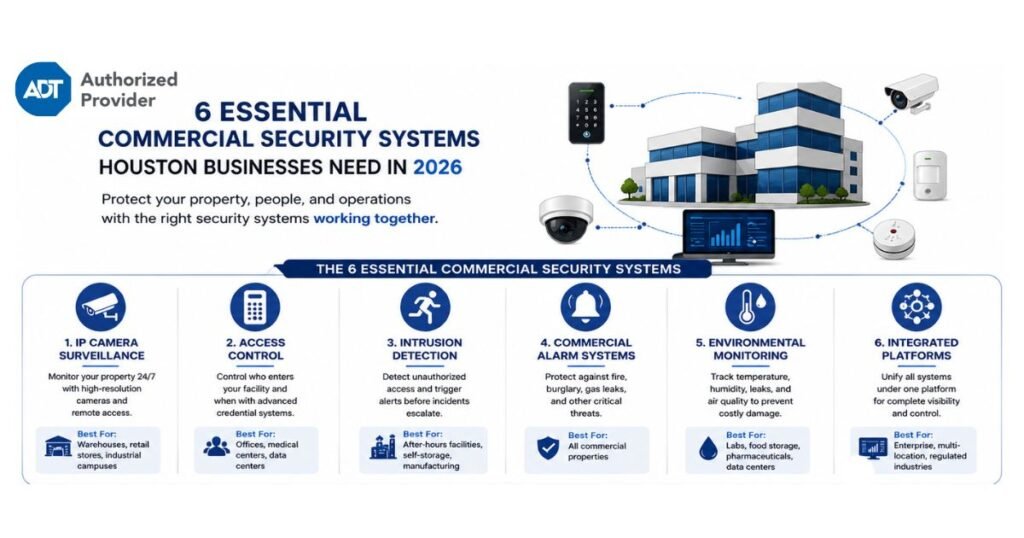
1. IP Camera and CCTV Surveillance Systems
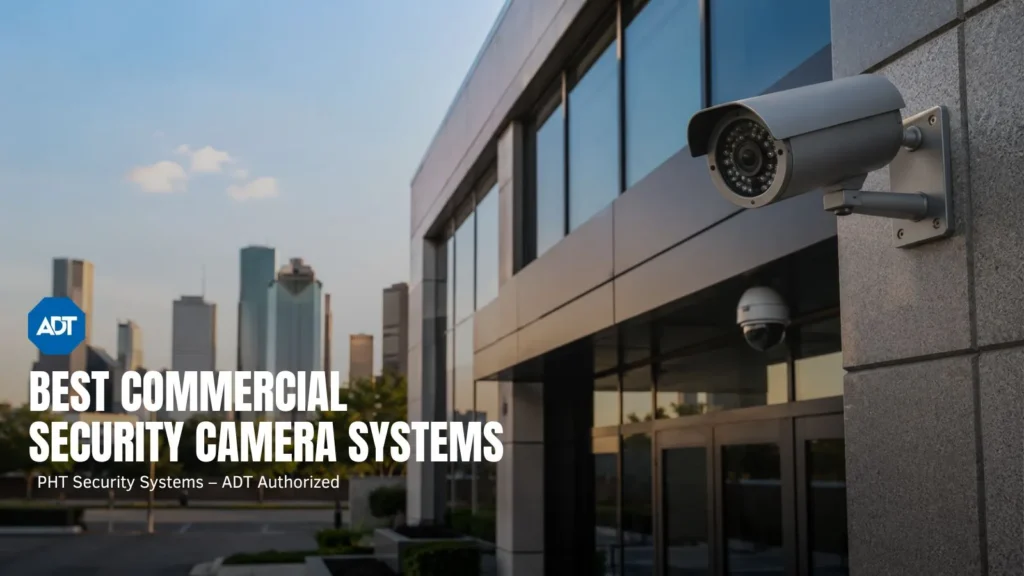
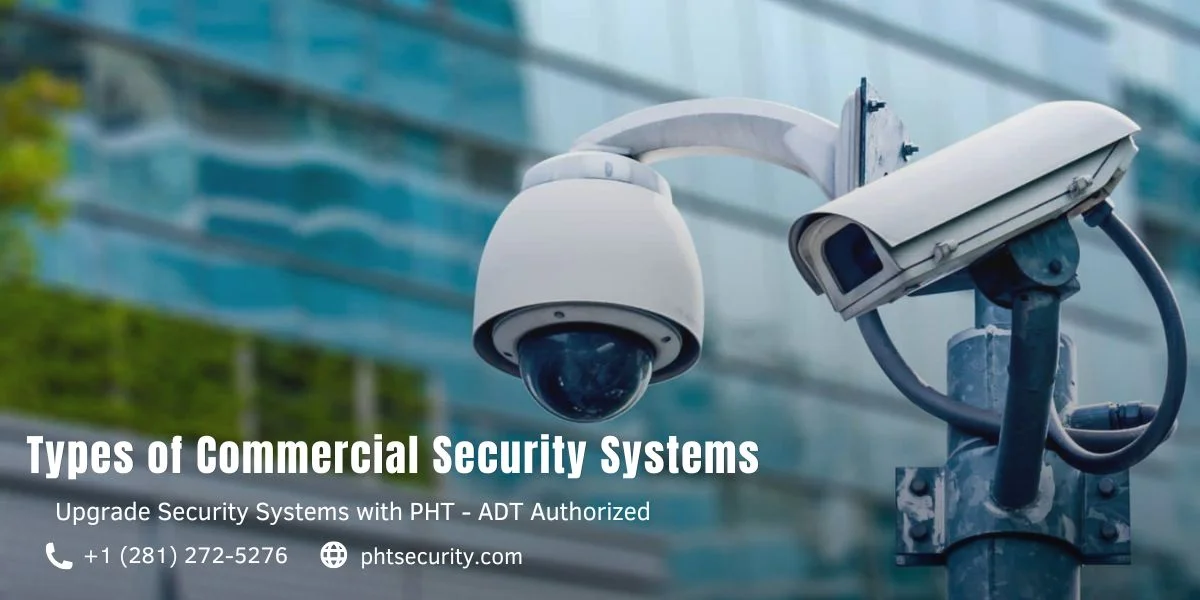
Cameras have been around forever, but what they can do now is a different story. Old analog CCTV systems recorded grainy footage to a DVR and called it a day. Today’s IP camera systems stream 4K video, detect motion with real precision, and flag unusual activity without anyone watching a screen. For a Houston warehouse or a multi-location retail operation, deciding between wired vs. wireless camera networks impacts your initial installation costs and long-term signal reliability. A cloud-based video management system means you can pull up any camera on your phone from anywhere.
For a Houston warehouse or a multi-location retail operation, a cloud-based video management system means you can pull up any camera on your phone from anywhere. No server room required. No IT headaches.
Where camera placement actually matters: shipping and receiving docks, parking perimeters, employee entrances, and any corridor connecting high-value storage to public areas. Lobbies alone leave too much uncovered.
Works best for: Warehouses, retail stores, industrial campuses, multi-site businesses
Core components: IP cameras, NVR, cloud video storage, motion analytics software
2. Access Control Systems
A key on a hook is not access control. Access control is knowing exactly who walked through which door at what time, and being able to cut that access in 30 seconds without changing a single lock.
Modern systems run on key cards, mobile credentials, PIN keypads, biometrics, or a combination. For a Houston office with 40 employees, a cloud-managed card reader setup is usually enough. For a medical facility or energy company with restricted zones, biometric multi-factor authentication is closer to what compliance requires.
Every entry attempt gets logged. That audit trail matters when an incident happens, during insurance claims, or when a regulatory body comes asking questions.
Works best for: Office buildings, medical centers, data centers, energy facilities, anywhere with restricted zones
Core components: Card readers, biometric scanners, mobile credential apps, cloud management dashboard
3. Intrusion Detection Systems
Intrusion detection catches unauthorized access and triggers a response before a situation gets worse. Sensors go on doors, windows, perimeter fencing, and interior chokepoints. When something trips, the control panel decides what happens next: alert the monitoring center, sound a local alarm, or notify a security guard.
The old knock on these systems was false alarms. A passing truck, a gust of wind, a bird hitting a sensor. That problem has shrunk considerably. Newer sensors separate a person from a vehicle from an animal with enough accuracy that trigger-happy alerts are far less common.
For Houston strip centers or standalone warehouses that sit empty after hours, an intrusion detection system paired with monitoring is one of the most cost-effective setups available.
Works best for: After-hours retail, self-storage, manufacturing plants, any facility sitting unattended overnight
Core components: Motion sensors, door and window contacts, glass break detectors, control panel
4. Commercial Alarm Systems
People use alarm system and intrusion detection interchangeably, but a commercial alarm system covers a wider range. Burglaries are one threat. Fire is another. So are gas leaks, flooding, and medical emergencies.
A commercial alarm system ties together smoke detectors, intrusion sensors, gas monitors, panic buttons, and environmental sensors under one control panel. For detailed regulatory standards on property defense, reviewing a comprehensive commercial fire alarm monitoring guide helps ensure your facility passes local municipal inspections. When anything triggers, the central monitoring station picks it up and dispatches the right response.
For Houston businesses storing chemicals, food, or pharmaceuticals, having fire and environmental alarms on the same monitored system as your intrusion detection is not optional. It is just how you protect inventory and stay compliant.
Works best for: Every commercial property, no exceptions
Core components: Smoke detectors, intrusion sensors, gas and flood detectors, control panel, 24/7 monitoring service
5. Environmental Monitoring Systems
This one gets skipped a lot. Environmental monitoring tracks temperature, humidity, water intrusion, air quality, and gas levels on a continuous basis. It is not glamorous, but it prevents the kind of losses that alarm systems and cameras cannot catch.
A pharmacy in the Houston Medical Center that loses refrigeration overnight. A restaurant walk-in cooler that floods on a Sunday. A data center where a cooling unit fails at 3 a.m. These are not security incidents in the traditional sense, but the financial damage is the same.
Environmental monitoring systems run quietly, check conditions constantly, and send an alert the moment something falls outside the acceptable range. That alert goes to the monitoring center, to your phone, or both.
Works best for: Food service, pharmaceuticals, laboratories, data centers, chemical storage, energy facilities
Core components: Temperature and humidity sensors, water leak detectors, gas monitors, remote alert software
6. Integrated Security Platforms
Here is where everything comes together. An integrated security platform connects your cameras, access control, alarms, and environmental sensors into one system with one dashboard.
Why does that matter? Because separate systems have blind spots. If your camera network and your access control do not talk to each other, you cannot easily match footage to a specific badge-in event. If your alarm system is disconnected from your environmental sensors, a response team might show up for a fire alarm and walk past an active gas leak in the same building.
Houston enterprises running energy corridors, port logistics operations, or hospital campuses already understand this. A unified platform gives security teams full visibility, faster response, and the kind of reporting that satisfies auditors and insurance carriers.
Works best for: Enterprise operations, multi-location businesses, regulated industries, anyone managing complex facilities
Core components: Unified security software, cloud infrastructure, AI-assisted analytics, cross-system integrations
Side-by-Side Comparison
| System Type | What It Does | Best Fit | Setup Complexity |
|---|---|---|---|
| IP Camera Surveillance | Continuous video monitoring and recording | Retail, warehouses, multi-site | Medium |
| Access Control | Manages who enters where and when | Offices, medical, data centers | Medium to High |
| Intrusion Detection | Detects and alerts on unauthorized access | After-hours facilities, storage | Low to Medium |
| Alarm Systems | Covers fire, intrusion, and hazard threats | All commercial properties | Low |
| Environmental Monitoring | Tracks temperature, gas, flooding, humidity | Labs, food storage, energy | Medium |
| Integrated Platforms | Unifies all systems into one dashboard | Enterprise, multi-location | High |
What Houston Businesses Actually Need
A camera without an alarm captures what happened after the fact. An alarm without cameras gives you no context. Access control without integration leaves your entry logs in a silo. These systems work best in combination, not in isolation.
Most Houston businesses start with cameras, monitored alarms, and access control. From there, the industry drives the rest. Oil and gas facilities add environmental monitoring, while healthcare and finance operations layer on integrated platforms. Commercial security system installation requires a professional site assessment where a licensed consultant walks your building, reviews your entry points, and maps a layout that eliminates blind spots.
Start with a professional site assessment. A licensed security consultant walks your building, reviews your entry points, understands your industry risks, and then recommends a configuration that fits. That beats buying systems first and finding the gaps later.
Ready to protect your Houston business? Schedule a free commercial security assessment with our team today.
Frequently Asked Questions
What types of commercial security systems do Houston businesses need most?
Most Houston commercial properties need at minimum three systems: IP camera surveillance, a monitored alarm system, and access control. Beyond that, industry drives the decision. Energy and industrial facilities usually add environmental monitoring. Medical and financial businesses rely heavily on integrated platforms for compliance and audit trails.
What is the difference between CCTV and IP camera systems?
CCTV is older analog technology that records locally to a DVR. IP cameras send digital footage over a network to an NVR or cloud storage. IP systems offer sharper resolution, remote viewing from any device, AI-assisted motion detection, and easier scalability. For any new commercial installation in Houston today, IP is the standard.
How much does a commercial security system cost in Houston?
It depends on building size, system type, number of entry points, and monitoring requirements. A basic camera and alarm setup for a small business typically starts in the low thousands installed. Enterprise-level integrated platforms for larger facilities run significantly higher. Most Houston providers offer free site assessments before quoting, which is the right starting point before comparing prices.
Do Houston commercial properties need 24/7 professional monitoring?
For most businesses, yes. A self-monitored system puts the response burden on you or your staff, which breaks down after hours, on weekends, and during holidays. Reviewing the core operational differences of alarm monitoring vs. self-monitoring shows why professional tracking is necessary. A professionally monitored system routes every alert to a staffed central station that dispatches emergency services right away.
Can commercial security systems in Houston be integrated into one platform?
Yes, and for most businesses that is exactly what to plan toward. Modern commercial security platforms connect cameras, access control, alarms, and environmental sensors under a single management dashboard. Integration removes blind spots, speeds up incident response, and simplifies the reporting that insurers and regulators ask for.

PHT Security Team
We believe everyone deserves to feel safe at home and at work. Our team shares practical security advice, helpful resources, and the latest insights on ADT systems, security cameras, smart home technology, and commercial security to help you make informed decisions. Whether you’re exploring your first security system or upgrading your current setup, we’re here to help you protect what matters most.
PHT Security Team
we believe everyone deserves to feel safe at home and at work. Our team shares practical security advice, helpful resources, and the latest insights on ADT systems, security cameras, smart home technology, and commercial security to help you make informed decisions. Whether you’re exploring your first security system or upgrading your current setup, we’re here to help you protect what matters most.