Wireless Fire Alarm Monitoring Systems -The Complete Guide for Homes & Businesses
| PHT Security Team
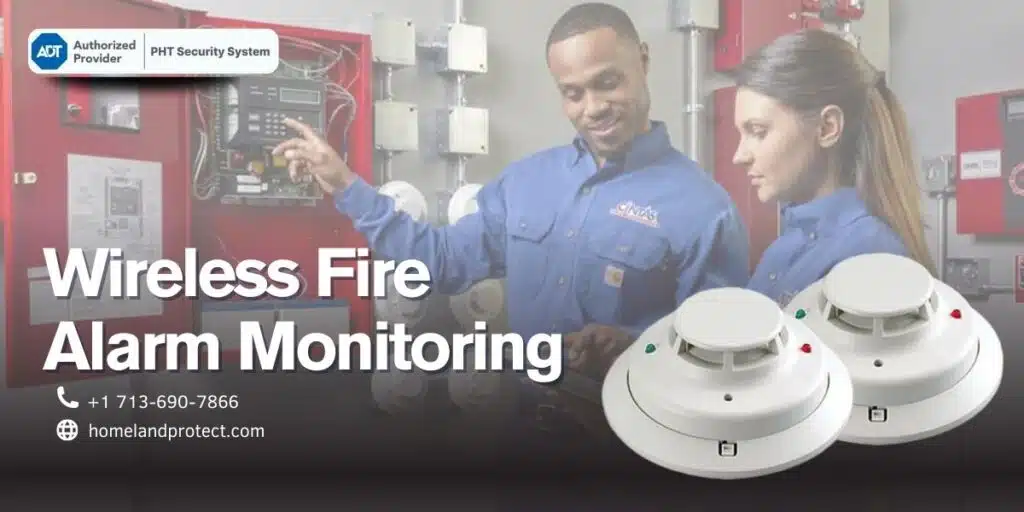
Most people don’t think about fire protection until something goes wrong. A neighbor’s house catches fire, or a building down the street fills with smoke at 2 AM while everyone’s asleep. That’s usually the moment it clicks a smoke detector that beeps is not the same thing as a system that actually gets help to your door.
Wireless fire alarm monitoring is what closes that gap. And if you own a home or run a business anywhere in Houston, Pearland, League City, or the surrounding area, understanding how it works and what you actually need could be one of the more important decisions you make this year.
So What Makes It Wireless
No Cables, No Tearing Into Walls
A traditional fire alarm system runs cables through walls and ceilings to connect every detector back to a central panel. It works, but running that wiring through a finished building is expensive, messy, and sometimes not even possible without tearing things apart.
Wireless fire alarm systems skip the cabling entirely. Each smoke detector, heat sensor, or carbon monoxide detector communicates with the control panel using encrypted radio frequency signals. The panel talks to a 24/7 professional monitoring center through a cellular connection, a broadband connection, or both running at the same time.
Why Monitoring Changes Everything
When a detector goes off, the signal reaches the monitoring center in seconds regardless of whether you’re home, awake, or even in the country. PHT Security’s ADT monitoring services in Houston work exactly this way. Operators receive the alert, try to reach you, and if they can’t confirm it’s a false alarm, they contact emergency services directly.
That’s the part people underestimate. A beeping smoke alarm only helps if someone is there to hear it and react. A monitored system reacts on its own.
How a Fire Actually Gets Detected and Reported
Photoelectric vs. Ionization: Two Different Jobs
There are two main types of smoke detection technology, and they don’t do the same job.
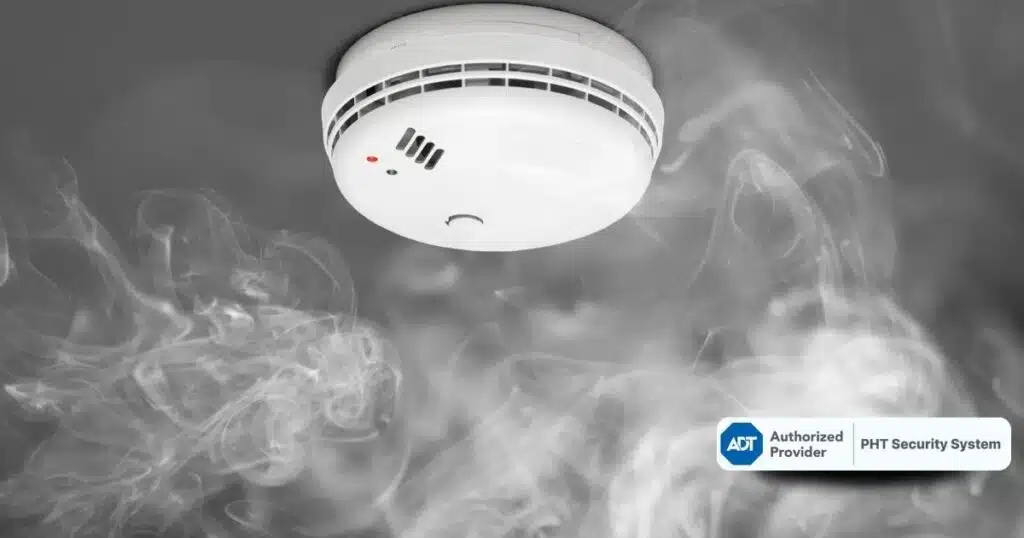
Photoelectric detectors work by shining a light beam inside the unit. When smoke particles enter and scatter that beam, the alarm trips. These are better at picking up slow, smoldering fires — the kind that start in furniture or inside walls and build gradually before breaking out into open flame.
Ionization detectors use a small electrical current. Smoke disrupts the current and triggers the alarm. They respond faster to fast-moving, flaming fires with rapidly rising heat.
Most people don’t know which type they have, and older single-technology detectors miss one category or the other entirely. Modern dual-sensor detectors handle both, which is also why they trigger far fewer false alarms from cooking steam or shower humidity. Fewer nuisance alarms matter more than people think. When alarms go off constantly for no reason, occupants start ignoring them, and that habit is dangerous.
From Detector to Dispatch
Once a detector trips, the signal travels to the fire alarm control panel. The panel logs which device triggered and where in the building it is. Addressable systems go further by identifying the exact unit rather than just a zone, which helps firefighters know where to go in a large commercial building before they even walk through the door.
From the panel, the alert moves through the communicator to the monitoring center. The best systems use cellular and broadband connections running at the same time, so a cut phone line or a dropped internet connection doesn’t interrupt anything. Houston gets severe weather, and power disruptions during storms are not rare. A system that goes dark when the Wi-Fi goes out is not a reliable safety system.
The Equipment Inside the System
Smoke Detectors
Smoke detectors are the foundation of any fire alarm setup. For most homes, photoelectric detectors placed in bedrooms, hallways, and living areas give the earliest possible warning. For commercial spaces dealing with cooking equipment or industrial fumes, multi-criteria detectors that combine smoke and heat sensing are usually a better fit.
Heat Detectors
Heat detectors are useful in places where smoke detectors would false alarm constantly. Garages, commercial kitchens, and certain manufacturing areas produce fumes, steam, or particulates that would set off a smoke detector several times a day. A heat detector responds to temperature change instead, which makes it practical in environments where smoke-based detection isn’t workable.
Carbon Monoxide Detectors
CO is colorless and has no smell. You can’t detect it without a sensor, and by the time symptoms like headache and nausea appear, the situation is already serious. Having CO monitoring on the same wireless platform as your fire alarm means one alert system covers two genuinely life-threatening hazards in a single setup.
Fire Alarm Control Panel
The control panel is where everything comes together. It receives signals from every connected detector, processes the data, manages the connection to the monitoring center, and gives building owners a real-time view of system status, battery levels, and any faults. Modern panels include digital displays and app-based remote access so you can check the system from your phone.
Manual Pull Stations
Required in commercial buildings under NFPA 72, manual pull stations give occupants a way to trigger the full alarm manually if they see or smell something before any detector has picked it up. In Houston, commercial facilities need at least one pull station installed in an approved, accessible location.
Notification Devices
The sirens, strobes, and speaker systems that alert everyone inside the building have to meet specific audibility and visibility requirements under NFPA 72 based on the building’s layout and occupancy load. A strobe visible from one corner of a room doesn’t satisfy code if occupants on the other side can’t see it.
Wireless Communicator
This is the component that sends alarm signals from the control panel to the monitoring center. Hybrid communicators using cellular and broadband simultaneously give the most reliable signal path — which matters in Houston, where a single storm can knock out one communication channel at a time.
Wireless vs. Wired, Honestly
When Wired Makes Sense
Wired systems have been the commercial standard for decades, and there are good reasons for that. They pull power directly from the building’s electrical system, which means no batteries to replace. In a new construction project where wiring gets planned before walls go up, a wired system is straightforward and inexpensive to install.
When Wireless Is the Better Call
The problem is most buildings aren’t new construction. Running cable through finished drywall in an occupied office building or a 1970s Houston home is expensive, disruptive, and sometimes structurally impractical. That’s where wireless makes sense existing buildings, renovation projects, historic properties, multi-tenant spaces where changes need to be reversible. Wireless installation is faster, cleaner, and doesn’t require tearing into walls.
The Reliability Question
The reliability concern used to be real. Early wireless systems had signal issues and battery problems. That’s largely not the case anymore. Current wireless components use dedicated radio frequency bands with encrypted two-way communication. The control panel monitors every device on the network and flags anything showing a weak signal or low battery before it becomes an actual problem. Most modern batteries last three to five years.
What About Hybrid Systems?
For properties that want the flexibility of wireless but also the redundancy of a wired power source, hybrid systems are worth considering. The core panel and primary sensors run on wired power while additional zones use wireless devices. It’s a practical middle ground for larger commercial facilities that need both stability and scalability.
What Texas and Houston Actually Require
NFPA 72 Is the Baseline
In Texas, fire alarm systems have to meet NFPA 72, the National Fire Alarm and Signaling Code. This covers everything where devices go, how the system is installed, how often it gets inspected, what records have to be kept, and what performance standards the equipment must meet.
The 2025 edition of NFPA 72 added cybersecurity requirements for any fire alarm system connected to an IP network, which covers most modern systems. Houston has incorporated these cybersecurity standards into local amendments, so if your commercial system runs on a network connection, your installer needs to document compliance with Chapter 11 of NFPA 72.
Texas State Fire Marshal Licensing
The Texas State Fire Marshal’s Office licenses fire alarm companies and technicians operating in the state under Texas Insurance Code Chapter 6002. Any company you hire to install or monitor a fire alarm in Texas should hold SFMO licensing. It’s worth verifying this before you sign a contract, not after.
Houston’s Local Authority Having Jurisdiction
Houston’s Authority Having Jurisdiction the local AHJ can impose requirements beyond the NFPA 72 baseline. For commercial projects especially, engaging with the AHJ before installation prevents costly rework when the inspector shows up and finds something doesn’t meet local amendments.
When Is a Fire Alarm System Required in Houston?
The basic rule of thumb in Houston is that a commercial fire alarm system is required if a building has an occupant load of 300 or more, if it has dwelling or sleeping units three stories or more above ground, if it contains more than 16 dwelling or sleeping units, or if it’s a public school or licensed childcare facility. Those are minimums. Specific occupancy types and building classifications can trigger additional requirements on top of these.
Annual Inspections and Documentation
NFPA 72 requires a full annual inspection by a licensed fire alarm technician. High-risk facilities like hospitals and schools need more frequent checks. Written records of every inspection, test, and repair have to be maintained and available to show inspectors or insurance carriers.
Who Actually Needs This
Homeowners
Homeowners who travel or work long hours are the most obvious case. If a fire starts in your house at midnight while you’re in Dallas on a business trip, a beeping smoke alarm does nothing. A monitored system contacts the fire department whether you’re home or not. Our residential security system packages combine fire monitoring with intrusion detection, so you’re not running two separate systems through two separate companies.
Landlords and Property Managers
Landlords get overlooked in this conversation. A rental property sitting empty between tenants, or occupied by tenants who sleep heavily, is a real liability. If a fire starts and there’s no one to call 911, the building burns. Monitored protection covers the property regardless of who’s inside or whether anyone responds to the alarm.
Small and Medium Businesses
A restaurant, auto shop, or warehouse running overnight with no staff is entirely unprotected if the only alarm is a local siren. Break-ins, electrical faults, and kitchen fires don’t wait for business hours. Our commercial security systems page covers how PHT Security approaches full commercial fire and security protection for Houston businesses.
Commercial Property Owners
Commercial property owners in Houston are frequently required by building code, insurance carriers, or lease agreements to maintain monitored fire alarm systems. An insurance-compliant monitored system often qualifies for premium reductions of 5 to 20 percent, which can offset a meaningful portion of the annual monitoring cost. You’ll need a certificate of monitoring from your provider to apply for the discount.
Facilities With Vulnerable Occupants
Schools, senior care homes, healthcare facilities, and daycares have no reasonable alternative to professional monitoring. Local code often requires it outright, and the practical need is obvious regardless of what code says.
Fire Alarms and the Rest of Your Safety Setup
Smart Integration in Homes
One thing that’s changed significantly in recent years is how well fire alarm systems connect with everything else in a building. When a properly integrated wireless system triggers, it doesn’t just make noise. Smart locks can unlock automatically to allow evacuation. HVAC systems can shut down so smoke doesn’t travel through ductwork into unaffected areas. Lights can come on at full brightness and guide people toward exits. Security cameras start recording.
For homes, it means your Google Home or Alexa app shows system status, and your phone gets an alert the moment anything triggers.
Smart Integration in Commercial Buildings
For commercial buildings, that kind of coordinated response happens faster than any manually executed emergency plan. Building management systems can receive fire alarm signals and trigger automated protocols across the entire facility at once no manual steps, no waiting for someone to read a situation and make a call.
Residential vs. Commercial: Different Requirements
If you’re weighing whether your property needs residential-grade or commercial-grade fire monitoring, the differences in code requirements, equipment, and monitoring protocols are real. Our article on fire alarm monitoring for residential vs. commercial properties walks through exactly where those requirements diverge and why it matters for what you install.
ADT’s monitoring platform backs every system PHT Security installs and supports integration with Google Nest products, Yale smart locks, and Z-Wave and Zigbee compatible devices across both residential and commercial setups.
Picking the Right Company
Check SFMO Licensing First
Any company installing or monitoring fire alarms in Texas is required to hold a license from the Texas State Fire Marshal’s Office. If a company can’t show you their license number upfront, that’s your answer.
Look for UL-Listed Monitoring
The monitoring center that receives your alarm signals should be UL-listed. That means it’s been tested against Underwriters Laboratories standards for response time, staffing levels, redundancy, and backup power. This is what insurance carriers require to issue a monitoring discount, and it’s what separates a real monitoring center from a call center answering phones.
Redundant Communication Paths
A system that only sends signals via broadband goes offline when the internet goes down during a storm. Cellular backup keeps the monitoring connection active when everything else fails. In Houston, this is not a theoretical concern it’s a regular reality during hurricane season.
Local Service Matters
A national company routing service calls through an out-of-state dispatch center might book you two weeks out for a sensor replacement. A local company answers the phone and sends someone the same day. When a device needs attention, response time is the only thing that matters.
Documentation After Installation
Your installer should hand you a complete record of device placement, system specs, and test results after installation. NFPA 72 requires this, your insurance carrier may ask for it, and your building inspector definitely will.
Working With PHT Security in Houston
PHT Security is a locally operated ADT Authorized Dealer with technicians licensed under Texas SFMO requirements. We work with homeowners and commercial property owners across Houston, League City, Pearland, Pasadena, Friendswood, Fresno, and Missouri City.
Every fire alarm system we install connects to ADT’s UL-listed monitoring infrastructure, backed by six interconnected monitoring centers across North America. Your signal reaches a staffed center regardless of local conditions.
We carry an A+ rating with the Better Business Bureau and have been serving Houston area property owners with ADT-backed fire and security monitoring for years.
Give us a call at (281) 272-5276 or schedule a free consultation online. We’ll look at your property, explain what local code requires, and give you a straight answer on what makes sense for your situation.
Frequently Asked Questions
What is wireless fire alarm monitoring?
It’s a fire detection system where smoke, heat, and CO detectors communicate wirelessly to a control panel, which sends alerts to a professional monitoring center running 24 hours a day. If a threat is detected and you can’t be reached, the center dispatches fire services to your property without waiting for anyone to call.
Are wireless fire alarm systems NFPA 72 compliant?
Yes, as long as they’re designed and installed by licensed technicians who know the code. NFPA 72 applies to both wired and wireless systems. The 2025 edition added cybersecurity requirements for networked systems, which Houston has also incorporated into local amendments. A qualified installer handles all of this as part of the installation process.
How often does a fire alarm system need to be inspected in Texas?
At minimum, once a year by a licensed fire alarm technician. Schools, hospitals, manufacturing facilities, and other high-risk environments need more frequent testing. Every inspection has to be documented in writing, and those records need to be available on request. PHT Security provides this documentation with every service visit.
Will the system still work if the power goes out?
Yes. Wireless fire alarm devices run on battery power and keep operating during outages. Systems with cellular backup maintain the monitoring connection even when internet service goes down. In Houston, where storms regularly knock out power and broadband, this matters quite a bit.
Can a monitored fire alarm system lower my insurance bill?
Many Texas insurance carriers offer discounts for professionally monitored systems, typically between 5 and 20 percent annually. You’ll need a certificate of monitoring from your provider to apply the discount. The savings sometimes offset a significant portion of the annual monitoring cost.
What’s the difference between a monitored and unmonitored fire alarm?
An unmonitored system sounds a local alarm and stops there. Someone nearby has to hear it and call 911. A monitored system contacts the fire department automatically even if the building is empty, even if no one hears anything, even if you’re asleep or traveling. That’s the core difference.

PHT Security Team
We believe everyone deserves to feel safe at home and at work. Our team shares practical security advice, helpful resources, and the latest insights on ADT systems, security cameras, smart home technology, and commercial security to help you make informed decisions. Whether you’re exploring your first security system or upgrading your current setup, we’re here to help you protect what matters most.
PHT Security Team
we believe everyone deserves to feel safe at home and at work. Our team shares practical security advice, helpful resources, and the latest insights on ADT systems, security cameras, smart home technology, and commercial security to help you make informed decisions. Whether you’re exploring your first security system or upgrading your current setup, we’re here to help you protect what matters most.