Houston Fire Alarm Monitoring: Residential vs. Commercial
| PHT Security Team
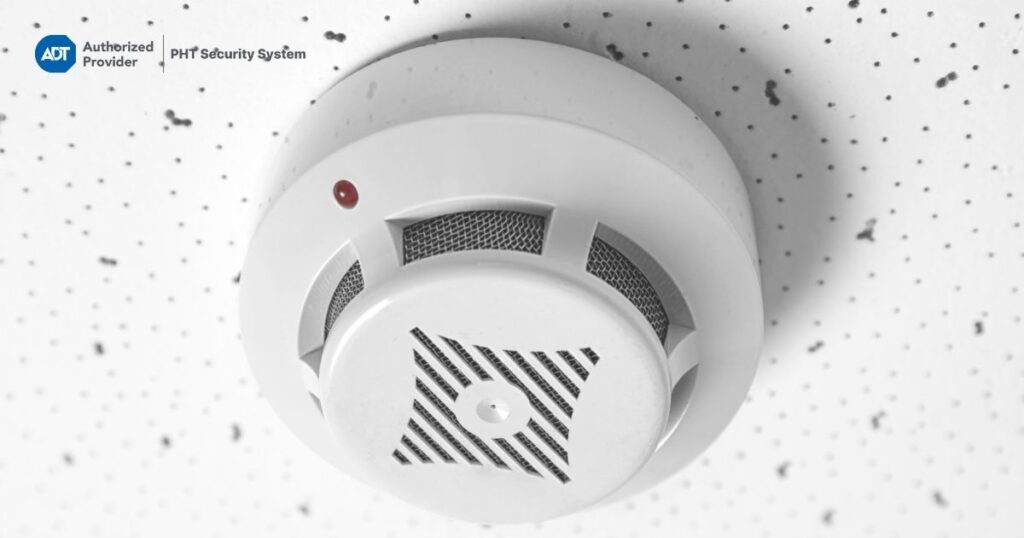
Here’s something most people get wrong. They assume a smoke detector on the ceiling counts as a fire alarm system. For a house, maybe. For a business, a warehouse, or even a mid-rise apartment building in Houston? That assumption could get your occupancy permit pulled before you ever open the doors.
Residential and commercial fire alarm monitoring are not the same product with different price tags. They run on different codes, different hardware, and completely different legal obligations. One is optional in many cases. The other carries mandatory inspections, documented compliance, and real enforcement.
So if you own property or run a business in the Houston area, here’s what you actually need to know.
What Fire Alarm Monitoring Actually Means
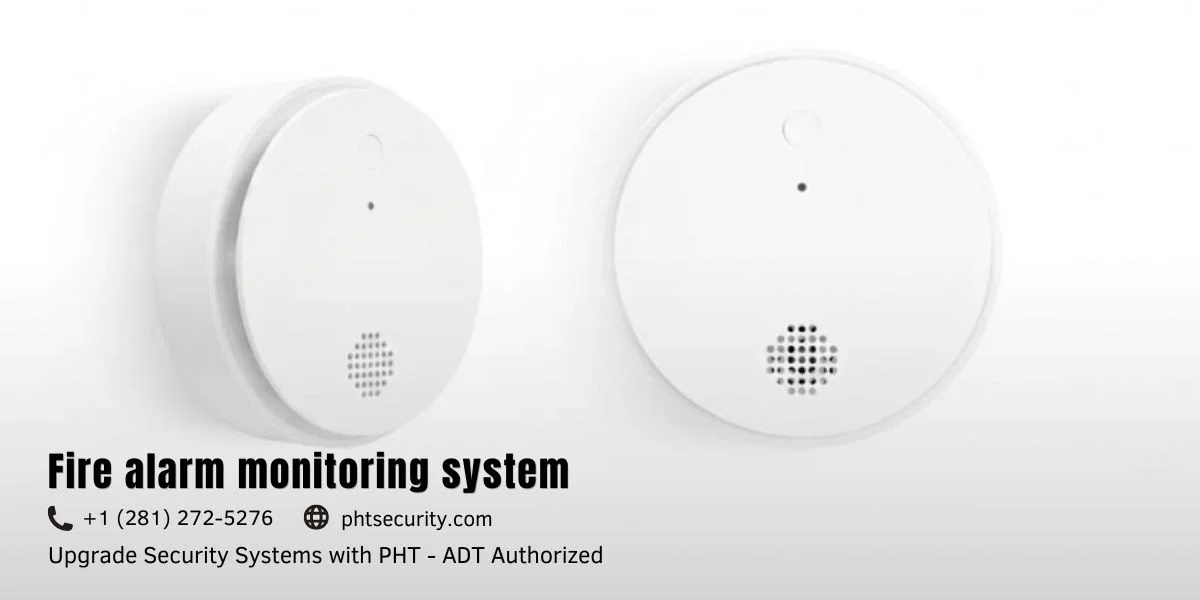
A monitored system does more than sound an alarm. When a detector triggers, the signal travels through a communication pathway to a central monitoring station staffed around the clock. Trained operators receive the alert, verify it, and dispatch the Houston Fire Department directly. Nobody needs to be inside the building. Nobody needs to call 911.
That last part matters more than people realize. A fire starting at 2 a.m. in an empty building with an unmonitored system burns until a neighbor notices smoke. A monitored system gets firefighters rolling within minutes of detection, even on a Sunday night in an office nobody visits until Monday.
The monitoring station connects to your fire alarm control panel through a telephone line, cellular connection, or internet pathway. Wireless fire alarm monitoring has become the preferred choice for most Houston properties because it keeps the signal moving even when a primary channel goes down which is exactly what Houston fire code requires.
Residential Requirements: What the Code Actually Says
For a standalone home in Houston, the rules stay fairly straightforward. Smoke detectors belong in every sleeping area, in the hallways outside those rooms, and on each floor including the basement. Under NFPA 72, all units must be interconnected, so when one triggers, every detector in the house sounds simultaneously.
Battery-operated detectors work fine in existing homes. New construction, however, typically needs hardwired units with battery backup.
Professional monitoring carries no legal requirement for single-family homes. That’s the short answer. Homeowners can choose it, and it’s genuinely worth having, but NFPA standards and Houston fire code do not mandate it for a detached house.
The situation shifts significantly once you move into multi-unit residential. Apartment buildings, condominiums, and rental complexes follow a completely different set of rules compared to a single-family home. These properties need a fire alarm control panel, hardwired interconnected systems, and in many cases a certified central monitoring station. Furthermore, high-rise residential buildings in Houston must include voice communication systems that broadcast emergency instructions to all floors simultaneously.
That jump from house to residential building is where a lot of property owners get caught completely off guard.
Commercial Requirements: A Different World Entirely
The moment a building carries a commercial classification, the entire framework shifts.
If you’re figuring out where your property stands, a commercial security system evaluation is the right starting point because NFPA 72, NFPA 101, the International Fire Code, and the Houston Fire Marshal’s Office all apply simultaneously, and they don’t overlap neatly.
The control panel is the starting point:
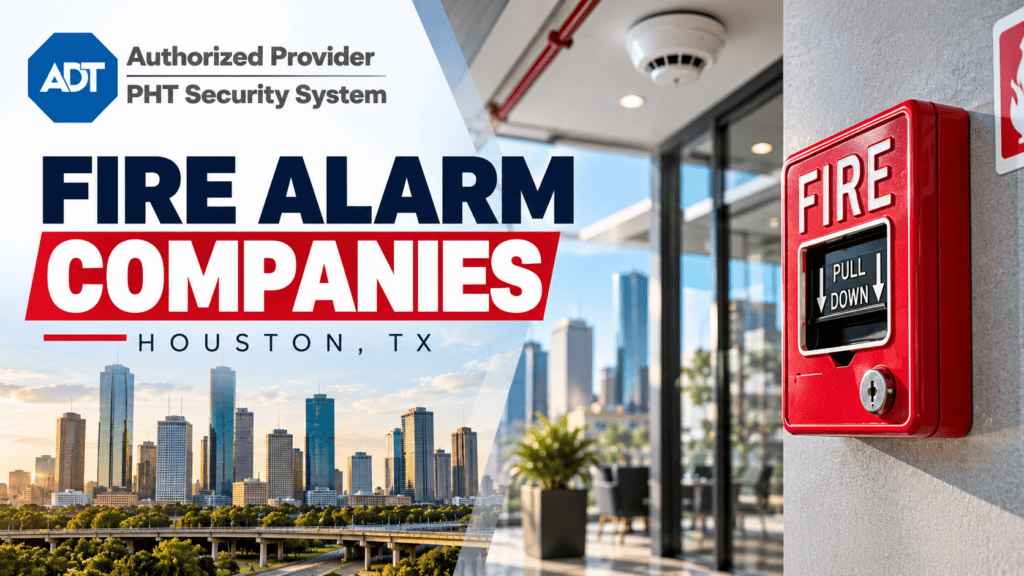
Every commercial system centers on a Fire Alarm Control Panel. It monitors every device on the network, logs which specific detector or pull station triggered an alarm, and activates notification appliances throughout the building. Moreover, addressable systems, now standard in most commercial buildings, pinpoint the exact sensor location and display it on the panel in real time.
Monitoring carries no optional status here:
For most commercial occupancies, a UL-listed central supervising station is a direct code requirement. That station must transmit alarm signals to emergency services automatically, without anyone making a phone call from inside the building.
The hardware list runs longer too:
Commercial buildings need manual pull stations at every exit and stairwell, photoelectric and ionization smoke detectors, heat detectors, notification appliances with both audible alarms and visual strobes, and a secondary power supply to keep the system running through a power outage. Larger buildings also integrate fire alarms with HVAC controls, elevators, sprinkler networks, and mass notification platforms so every building system responds together when an alarm fires.
Annual inspections are not negotiable:
Under NFPA 72, a licensed technician must inspect and test the system every year. All records must stay documented, on-site, and available for the fire marshal to review during any inspection. In Texas, moreover, the technician must hold an Alarm Certificate of Registration from the State Fire Marshal’s Office. Building owners face citations if their technician lacks proper credentials, even when the work itself meets code.
Residential vs. Commercial: At a Glance
| Feature | Residential | Commercial |
|---|---|---|
| Governing Code | NFPA 72, local fire code | NFPA 72, NFPA 101, IFC, AHJ |
| Control Panel | Not required for homes | Always required |
| Professional Monitoring | Optional | Mandatory for most occupancies |
| Addressable Detection | Uncommon | Standard |
| Pull Stations | Not required | Required at exits and stairwells |
| Annual Inspection | Owner’s responsibility | Licensed technician, documented |
| Backup Power | Battery | Hardwired secondary power source |
| Voice Evacuation | High-rise residential only | Required in many commercial spaces |
| AHJ Plan Review | No | Yes, before installation begins |
How Monitoring Actually Works: 6 Steps
Step 1: Detection A smoke detector, heat sensor, or manual pull station activates and sends a signal to the fire alarm control panel immediately.
Step 2: Panel Processing The control panel identifies the source, logs the device location, and triggers notification appliances throughout the building.
Step 3: Signal Transmission The panel sends an alarm signal to the central monitoring station. Because Houston fire code requires backup communication pathways, the signal goes through even when the primary channel fails.
Step 4: Monitoring Center Assessment Trained operators at the UL-listed station receive the signal and begin verification right away. Before dispatching, they typically attempt to reach the property owner or an on-site contact.
Step 5: Emergency Dispatch Once the alarm is confirmed or contact fails, the monitoring center notifies the Houston Fire Department directly. From signal to dispatch, the whole process takes minutes.
Step 6: Documentation The monitoring station logs every signal, response, and communication. For commercial properties, those logs form part of your official compliance record during fire marshal inspections.
Houston-Specific Rules You Need to Know
Houston layers its own requirements on top of national codes, and the Houston Fire Marshal’s Office enforces them actively.
Plan review before installation.
Every commercial fire alarm system goes to the HFMO for review before installation begins. After installation, the HFMO conducts an acceptance test. Until that test passes, the system cannot legally go into service.
Central monitoring is required.
Every alarm system under Houston fire code must connect to a central monitoring station capable of dispatching emergency responders immediately. Disconnecting or disabling a monitoring line without authorization counts as a code violation and brings financial penalties.
Annual fire alarm permits matter.
Houston requires commercial buildings to carry a current annual fire alarm permit. The permit office sits at 1002 Washington Ave, reachable at 832-394-8811. Building classification depends on system size: Group A covers up to 10 alarm-actuating devices, while Group B covers 11 to 100. Accumulating too many false alarms within the permit period can trigger revocation.
The 2024 code update changed the game.
Houston recently adopted the 2024 International Fire Code with local amendments. As a result, voice evacuation systems that were previously optional in many assembly spaces now carry mandatory status. Annual inspection documentation faces stricter enforcement. Additionally, many commercial fire alarm panels must now work with mass notification systems. Older buildings that previously passed inspection may need retrofits today.
Harris County properties follow different rules.
If your building sits in unincorporated Harris County rather than inside Houston city limits, the Harris County Fire Marshal’s Office applies the 2018 International Fire Code as Harris County Commissioners Court adopted it. Operational permits still apply, but the enforcement authority and contact points differ from the HFMO.
Questions People Actually Ask
Is professional fire alarm monitoring required for a house in Houston?
Not for a single-family home. Neither NFPA standards nor Houston fire code mandate it. However, the requirement changes for multi-unit buildings, condominiums, and high-rises, where monitoring rules tighten significantly based on occupancy size and building height.
What makes a monitoring station “UL-listed”?
Underwriters Laboratories audits the facility and verifies it meets specific standards for staffing, backup systems, and response procedures. Most commercial fire codes specifically require a UL-listed central station, not just any monitoring provider.
How often does a commercial system need inspection in Houston?
Annual inspection is the minimum, performed by a technician holding a Texas State Fire Marshal’s Alarm Certificate of Registration. Records must stay on-site. Expired inspection tags rank among the most common violations HFMO inspectors catch.
What is an addressable fire alarm system and do I need one?
An addressable system assigns a unique electronic address to every connected device. When something triggers, both the panel and the monitoring station know the exact device location rather than just a general zone. Most new commercial installations use addressable systems because both the code and practical response needs point that way.
What happens if Houston’s fire marshal finds a non-compliant system?
The HFMO issues red or yellow tag notices. A red tag takes the system out of service and triggers immediate action against the building. Yellow tags flag deficiencies with a correction deadline attached. Both types of notices can go directly to the HFMO by email.
Does a Houston business need an annual fire alarm permit?
Yes, and it requires annual renewal. False alarm accumulations above the threshold for your permit group can lead to fees and eventually permit revocation.
Can a wireless fire alarm system meet Houston’s commercial requirements?
Yes, provided the components carry proper listing, stay compatible with the control panel, and meet all monitoring and backup communication specifications. Even so, the design still needs HFMO review before installation starts.
What is the difference between a central supervising station and a remote supervising station?
A central station delivers full 24/7 monitoring, sends a runner to physically check the property after every alarm signal, and takes on system maintenance responsibility. A remote station also provides 24/7 monitoring, but it shifts installation, maintenance, and inspection responsibility to the property owner instead.
Not sure where your property stands? Book a free consultation and we’ll walk through your current setup.
What This All Comes Down To
A smoke detector on your bedroom ceiling and a monitored commercial fire alarm system are not even close to the same thing. The gap between them covers code requirements, hardware complexity, legal accountability, and active enforcement. In Houston, the Fire Marshal’s Office checks commercial properties regularly, and the 2024 code update has widened the net for who now needs upgrades.
If you’re unsure whether your current setup meets the right standard, a professional system evaluation today costs considerably less than a red tag violation tomorrow.

PHT Security Team
We believe everyone deserves to feel safe at home and at work. Our team shares practical security advice, helpful resources, and the latest insights on ADT systems, security cameras, smart home technology, and commercial security to help you make informed decisions. Whether you’re exploring your first security system or upgrading your current setup, we’re here to help you protect what matters most.
PHT Security Team
we believe everyone deserves to feel safe at home and at work. Our team shares practical security advice, helpful resources, and the latest insights on ADT systems, security cameras, smart home technology, and commercial security to help you make informed decisions. Whether you’re exploring your first security system or upgrading your current setup, we’re here to help you protect what matters most.