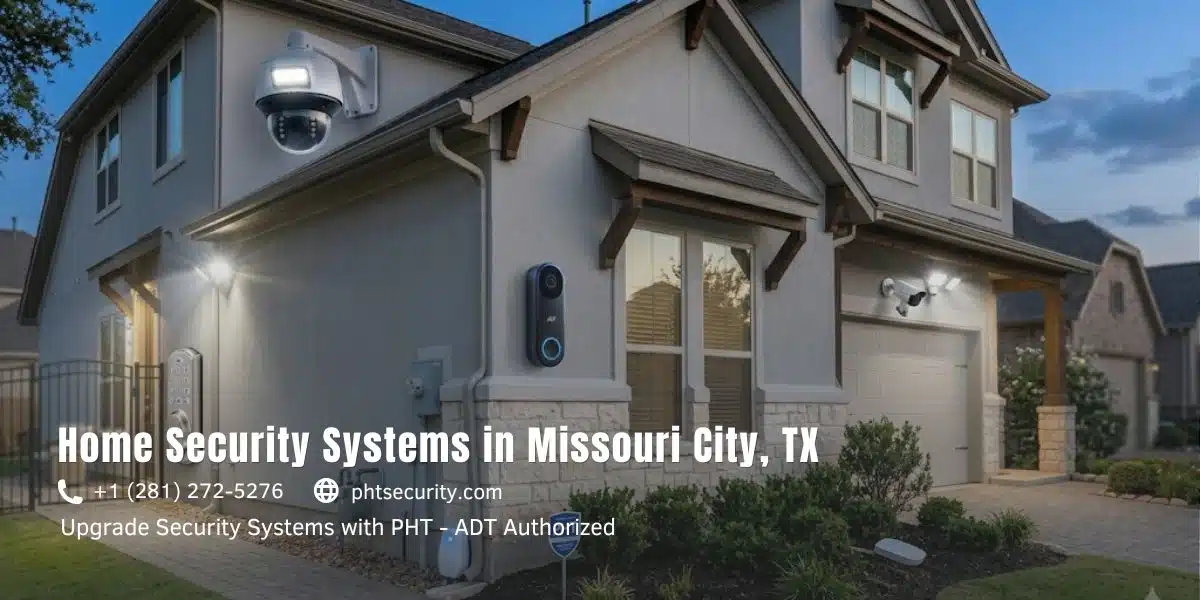
If you haven’t touched your home security setup in three years, it’s probably further behind than you think. Tech moves fast, but more importantly, older systems have some frustratingly physical weak points. We’re seeing landlines get cut, sensors that can’t tell the difference between a burglar and a gust of wind, and cameras that record everything but alert you to nothing.
In Houston, we have a few extra hurdles—like humidity that eats through cheap sensors and specific neighborhood crime trends that dictate where you actually need coverage. Here’s a look at when it’s time to trade in the old gear, what’s actually worth the investment, and what those upgrades look like for your budget.
7 Signs Your Home Security System Is Overdue for an Upgrade
Before deciding how to upgrade, it helps to know why you need to. Here are the clearest warning signs:
1. It still runs on a landline.
This is the single biggest vulnerability in older systems. A burglar who knows what they’re doing can sever your phone line before your alarm ever reaches a monitoring center. Modern systems communicate through cellular networks and dual-path connections — your home stays protected even if the phone line goes down. Our ADT alarm monitoring services in Houston utilize dual-path connections to ensure your signal always reaches the dispatch center.
2. Your cameras can’t identify a face.
If your current footage looks like a blurry, foggy mess, it’s basically useless when you actually need it. Modern 4K cameras have finally solved the ‘Texas glare’ problem with better dynamic range, meaning you can actually see faces even in that harsh midday sun. Plus, the AI has matured; it’s smart enough now to ignore your dog or a swaying tree branch, so you only get an alert when an actual person is at your door.
If you’re ready to fix those blind spots, the right way to install a security camera system is to focus on these high-traffic entry points.
3. Your system can’t connect to your phone.
If you can’t check in, arm, or disarm remotely, you’re missing one of the most practical features available right now — and a real safety gap when you’re traveling.
4. You’re getting constant false alarms.
Older motion detectors can’t distinguish between a delivery driver and wind moving tree branches. That’s not just annoying — frequent false alarms can lead local authorities in Houston to deprioritize your address.
5. Your sensors haven’t been replaced in over a decade.
Smoke detectors should be replaced every 10 years per the US Fire Administration. Door and window sensors wear out too, especially in Houston’s humidity.
6. Your system uses 3G communication.
Major carriers completed their 3G network shutdowns in 2022. If your security system’s cellular communicator still runs on 3G, it is no longer transmitting — your “monitored” system may be silently failing.
7. You have no smart home integration.
Modern security systems use Z-Wave or Zigbee technology to connect all aspects of home automation – this means your locks, lights and thermostat all work as one unit. If your doorbell camera doesn’t automatically trigger porch lights or unlock your door upon recording video clips for you, that means your security system doesn’t utilize Z-Wave or Zigbee to communicate between each aspect – meaning gaps remain that would have been addressed years ago had a truly connected system been in place.
How Much Does It Cost to Upgrade a Home Security System?
This is the question most guides skip. Here’s an honest breakdown:
Partial upgrade (add-ons to an existing system): $150 – $600 depending on what you add. A video doorbell, a couple of outdoor cameras, or a smart lock can each be added without replacing your entire setup — if your current system supports them.
Control panel and communicator upgrade: $200 – $500 installed. This is often the most impactful single upgrade, especially if your system is landline-dependent or uses outdated cellular hardware.
Full system replacement: $500 – $1,500 for equipment, plus professional installation. With ADT monitoring starting at $36.99 per month, many Houston homeowners find that the full replacement pays for itself quickly. When looking for the most reliable Residential Security System Installation, integrating smart tech with professional monitoring is the standard for 2026.
Insurance discount: Most major insurers offer 5% to 20% off homeowner’s premiums for professionally monitored systems. In Harris County, where average premiums run higher than the national average due to storm and flood risk, this discount compounds meaningfully.
PHT Security offers free consultations at (281) 272-5276 — we’ll assess your current setup and tell you exactly what’s worth keeping and what isn’t, before you spend a dollar.
The 5 Upgrades That Matter Most in 2025
1. Upgrade your control panel to cellular communication
If there’s one upgrade that makes everything else possible, it’s this one. A modern panel — like the ADT Command touchscreen — connects to our monitoring centers through cellular and broadband simultaneously. Cut the landline, gain remote access, and open the door to every smart feature that follows.
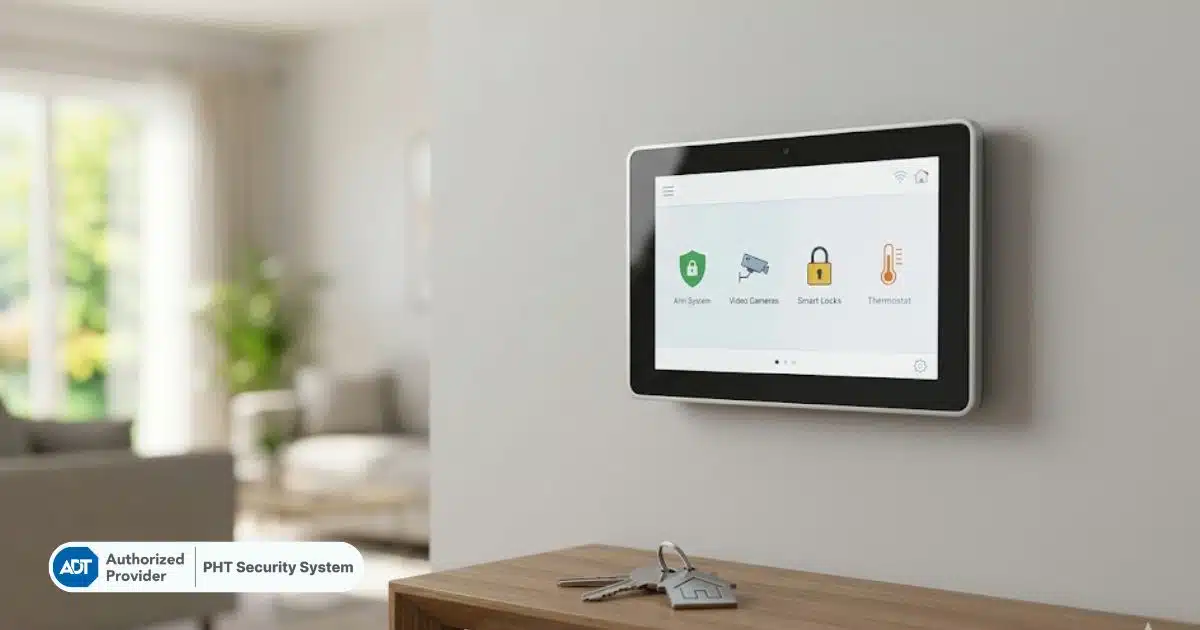
Replacing just the communicator on a compatible system often costs far less than people expect and takes a licensed technician under two hours.
2. Add a video doorbell camera
In Houston, porch theft and front-door break-ins are among the most reported property crimes. A video doorbell gives you two-way audio, motion-triggered recording, and a wide-angle view of your entry — all visible from your phone, wherever you are.
Brands like Ring and Nest integrate directly with ADT systems installed by your local dealer. For renters or homes where drilling isn’t ideal, battery-powered options with no wiring at all are available.
3. Upgrade to AI-powered outdoor cameras
Today’s outdoor cameras don’t just record — they think. Person detection filters out cars, animals, and lighting changes so you only get notified when it matters. Package detection, vehicle recognition, and facial learning all exist in consumer-grade cameras now.
For Houston properties: look for cameras rated IP66 or higher for weather resistance, and models with wide dynamic range to handle the contrast between bright Texas sun and shaded entryways.
4. Add glass break sensors and environmental detectors
Windows are the second most common entry point in residential burglaries — and most home security systems still don’t cover them adequately. A glass break sensor covers every window in a room from a single device, triggering the alarm at the sound of breaking glass.
While you’re adding sensors, also consider: carbon monoxide detectors integrated with your alarm system, flood sensors (particularly important for homes in Houston’s flood-prone areas), and smoke detectors tied into professional monitoring.
5. Switch to smart locks and remote access
Smart locks let you lock or unlock your door from anywhere, create temporary access codes for service workers or guests, and receive a log of every entry. Combined with a security camera at the door, you have full visibility of who’s coming and going — without ever handing out a physical key.
August, Schlage Encode, and Kwikset Halo are popular models that work within ADT’s ecosystem. Many can be retrofit onto your existing deadbolt hardware without major installation work.
Can I Upgrade My Existing System or Do I Need a Full Replacement?
This depends on two things: how old your system is and who installed it.
If your system is 5–10 years old and uses a DSC, Honeywell, or similar panel, there’s a good chance the hardware can be updated with a communicator swap and new sensors — without touching your existing wiring. Many wired systems support modern wireless sensors added alongside existing components.
If your system is 10–15+ years old, uses only landline communication, or is a proprietary brand that no longer manufactures compatible parts, a full replacement is almost always the better investment. Piecemealing outdated infrastructure leads to compatibility gaps and monitoring blind spots.
At PHT Security, we carry ADT-compatible equipment that works with both fresh installations and partial upgrades on existing systems. Our technicians will walk through your current setup and give you a straight answer — not a sales pitch.
Wired vs. Wireless: What Changes When You Upgrade?
A common concern we hear from Houston homeowners: “I have wiring already in the walls. Does upgrading mean losing all of that?
Not necessarily. Here’s how it typically breaks down:
Keep your existing wired sensors — if they’re in good condition, many wired door/window sensors and motion detectors can be connected to a new wireless-capable control panel through a wired zone expander.
Replace your communicator and panel — this is usually where the biggest upgrade value comes from. Modern panels support both your legacy wired zones and new wireless sensors, so you can expand incrementally.
Add wireless where wiring isn’t practical — outdoor cameras, garage sensors, and additional entry points are almost always better served by wireless devices anyway.
The result: a hybrid system that keeps your existing infrastructure and gains all the modern capabilities you’ve been missing. Our team specializes in this type of complex security system installation, ensuring your old sensors play nice with new tech.
Frequently Asked Questions
How long does a home security upgrade take?
Most upgrade appointments — panel swap, new sensors, camera installation — take between 2 and 4 hours for a standard Houston-area home. Full system replacements may take a half day.
Does upgrading void my existing ADT contract?
If you’re upgrading with an ADT authorized dealer like PHT Security, your monitoring contract typically continues without interruption. We’ll review your current agreement before any work begins.
Can I keep my existing cameras when I upgrade?
It depends on the brand and protocol. Some third-party cameras integrate with ADT’s platform; others don’t. We’ll check compatibility as part of the free consultation.
Will a security upgrade lower my home insurance?
In most cases, yes. Professionally monitored alarm systems qualify for discounts with most major carriers. Ask your insurer specifically about UL-listed monitoring systems , ADT’s monitoring centers are UL-listed, which is the highest standard recognized by insurers.
Does my upgraded system work during a power outage?
Modern systems include battery backup that keeps the panel and sensors running during power failures — critical in a city like Houston where storm-related outages are common. Cellular communication also keeps you connected when internet goes down.
Is PHT Security an ADT dealer?
Yes —PHT Security (Preferred Home Technologies Inc.) is an authorized ADT dealer serving Houston, League City, Pearland, Missouri City, Friendswood, Fresno, and Pasadena, TX.
Serving Greater Houston — Local Expertise Matters
Home security isn’t one-size-fits-all, and in Houston it really isn’t. The right camera placement for a home in Pearland looks different from one in a townhome near Montrose. Flood sensor priority is different in Friendswood versus Friendswood Heights. Heat, humidity, and storm exposure affect which outdoor hardware lasts.
PHT Security’s technicians are based here. As your local Houston home security experts, we know the area, we know the common vulnerabilities, and we install systems we stand behind.
What to Do Right Now
Start with a walk-through of your own home. Check the age of your sensors, find out whether your panel uses landline or cellular, and look for blind spots in your camera coverage — front door, back entry, garage.
Then call us. A 20-minute conversation is usually enough to know exactly what your home needs, what it doesn’t, and what it’ll cost. No pressure, no obligation.