When Is Fire Alarm Monitoring Required? NFPA Rules
| PHT Security Team

A fire alarm and a monitored fire alarm aren’t the same thing, and plenty of property owners find that out the hard way, usually during an inspection. The alarm makes noise. Monitoring is what actually gets someone to respond when nobody’s around to hear it. If you’re trying to work out whether your building legally needs the second part, here’s the short version first, then the details that matter for your specific situation.
The Quick Answer
Monitoring is generally required if any of these apply to your building:
- It has an automatic fire sprinkler system, since the sprinkler’s waterflow and valve status has to report somewhere
- It falls into an occupancy type with a large or unpredictable number of people, like assembly spaces, schools, or healthcare facilities
- It’s a commercial building over a certain size or occupant load, and that threshold varies by local code
- It’s a high-rise or crosses a certain number of stories
- Your local fire code or your insurance carrier requires it as a condition of use or coverage
One- and two-family homes are the main exception. Under NFPA 101, single-family and duplex residences generally only need a local, audible alarm, not offsite monitoring. Almost everything else falls under stricter rules once a size or occupancy threshold gets crossed.
The Two Codes That Actually Decide This
Two different standards handle two different jobs here, and mixing them up is where most confusion starts.
NFPA 101, the Life Safety Code, decides whether a fire alarm system is required at all. It sorts buildings into occupancy types, and each type carries its own rules for alarms, exits, and evacuation.
NFPA 72, the National Fire Alarm and Signaling Code, governs how a required system has to be installed and tested, and critically, whether and how it gets monitored once it’s in place.
So the first question is whether NFPA 101 says your building needs an alarm system at all. The second, assuming it does, is whether NFPA 72 and your local fire code require that system to report offsite rather than just sound a bell locally. Local authorities having jurisdiction, usually a city or county fire marshal, adopt these codes and often layer their own amendments on top, which is why requirements shift from one city to the next even under the same base code.
Monitoring Requirements by Occupancy Type
NFPA 101 sorts buildings into more than a dozen distinct occupancy classifications, and monitoring requirements follow directly from which one a building falls into.
| Occupancy Type | Examples | Typical Monitoring Trigger |
|---|---|---|
| One- and two-family residential | Houses, duplexes | Not required; local alarm only |
| Apartments, hotels, dormitories | Multi-family housing | Often required once building size or unit count crosses local thresholds |
| Assembly | Theaters, restaurants, churches, event venues | Required once occupant load crosses roughly 50 to 300, depending on class |
| Business | Offices | Often required past a set square footage, commonly in the low thousands of square feet |
| Mercantile | Retail stores | Similar size and occupant-load triggers as business occupancies |
| Educational | Schools, universities | Required in nearly all cases |
| Healthcare and institutional | Hospitals, clinics, daycares, detention facilities | Required in nearly all cases, often with stricter response rules |
| Industrial and storage | Warehouses, manufacturing | Required for most, with high-hazard storage facing the strictest rules |
Assembly occupancies show how granular this gets. Under NFPA 101, assembly spaces are split into classes based on occupant load, and the largest venues face the most stringent alarm and monitoring rules, while smaller spaces often default to business or mercantile requirements instead.
What Triggers Monitoring Even Without an Occupancy Threshold
A few things push a building into monitoring territory no matter what type it is or how many people use it.
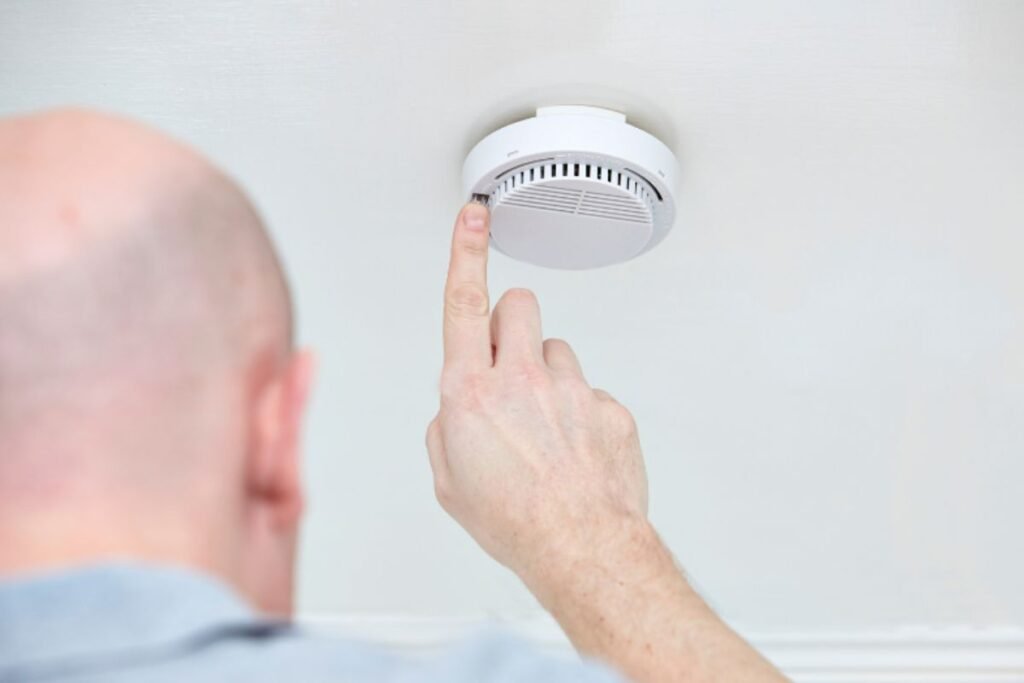
Sprinkler systems. If a building has automatic fire sprinklers, NFPA 72 requires supervisory monitoring of the water flow and valve status through the fire alarm panel. This applies almost universally once sprinklers go in, even in buildings that might otherwise be exempt.
Building height and size. High-rises and buildings past a certain floor area typically require a full monitored system under most adopted fire codes, independent of occupancy classification.
Mixed occupancy. If a building combines uses, say retail on the ground floor with apartments above, code generally applies the strictest requirement across the whole building rather than letting each portion follow its own rules, unless they’re properly separated by rated fire barriers.
Local amendments. Cities frequently tighten the baseline NFPA and IFC requirements. A building that looks exempt under a strict national reading of the code often isn’t exempt once local amendments get factored in.
What Monitored Actually Means in Practice
A monitored system connects your fire alarm panel to a UL-listed central monitoring station, staffed around the clock, over a primary communication path with a backup path running alongside it. When a device trips, the panel sends a signal to that station within seconds. A trained operator confirms the alert, contacts your designated point of contact, and notifies the fire department, all without anyone needing to be inside the building to notice.
A local-only system skips that last step entirely. It’ll make noise, but getting emergency services involved depends on someone nearby hearing it and picking up the phone. In an occupied building during business hours, that’s usually fine. In an empty warehouse at 2 a.m. on a Saturday, it’s the difference between a contained incident and a total loss.
If Your Building Is in Houston
Houston enforces its own fire alarm monitoring requirements on top of the NFPA baseline, with specific occupant-load and square-footage thresholds, sprinkler-related rules, and documentation standards that Fire Marshal inspectors check closely during annual reviews. Those specifics, along with current cost ranges and what changed in the most recent code update, are covered in our Houston commercial fire alarm monitoring guide. If your property is anywhere in the Houston metro, that page is the more precise resource once you’ve confirmed the general category your building falls into here.
How to Actually Check Where You Stand
Guessing isn’t a great strategy, since penalties for a non-compliant commercial system tend to escalate the longer they go unfixed. A few practical steps worth taking:
- Confirm your building’s occupancy classification. This is usually documented on your original permit or certificate of occupancy.
- Check whether you have a sprinkler system. If you do, monitoring is almost certainly required regardless of anything else.
- Contact your local fire marshal’s office directly. Requirements vary enough by jurisdiction that a general answer online shouldn’t replace a direct confirmation for your specific address.
- Ask your insurance carrier. Many commercial policies require proof of monitoring to maintain full coverage, independent of what the fire code technically mandates.
- Compare monitored versus self-monitored options if you’re still deciding what makes sense beyond the legal minimum.
Frequently Asked Questions
Does a small office need fire alarm monitoring?
It depends on square footage and whether the building has sprinklers. Many jurisdictions require monitoring once a business occupancy crosses a set size threshold, even for a fairly modest office. Sprinklers push the requirement into effect almost regardless of size.
Do apartment buildings need monitored fire alarms?
Usually yes, once the building exceeds a certain size or unit count, though single-family homes and small duplexes are generally exempt. Multi-family buildings large enough to need a building-wide alarm system typically also need it monitored.
Is a fire alarm panel enough if it’s not monitored?
No, in most jurisdictions where monitoring is required, a panel that only sounds a local alarm doesn’t satisfy the requirement. The system has to transmit a signal to an approved offsite monitoring station.
Who decides whether my building needs monitoring?
Your local authority having jurisdiction, usually a city or county fire marshal’s office, enforces this based on NFPA 101 and NFPA 72 as adopted locally, often with additional amendments layered on top.
Can older buildings be grandfathered out of monitoring requirements?
Sometimes, but not always. Renovations, occupancy changes, or added sprinkler systems commonly trigger a requirement to upgrade even in older buildings. It’s worth confirming directly rather than assuming an exemption still applies.
Get a Clear Answer for Your Property
If you’re still not sure where your building stands, PHT Security Systems offers a free compliance evaluation for properties across the Houston metro, including League City, Missouri City, Pearland, Friendswood, Fresno, and Pasadena. We’ll tell you plainly whether your current setup meets code and what it would take to fix it if it doesn’t.
Call (281) 272-5276 or request a free assessment online.

PHT Security Team
We believe everyone deserves to feel safe at home and at work. Our team shares practical security advice, helpful resources, and the latest insights on ADT systems, security cameras, smart home technology, and commercial security to help you make informed decisions. Whether you’re exploring your first security system or upgrading your current setup, we’re here to help you protect what matters most.
PHT Security Team
we believe everyone deserves to feel safe at home and at work. Our team shares practical security advice, helpful resources, and the latest insights on ADT systems, security cameras, smart home technology, and commercial security to help you make informed decisions. Whether you’re exploring your first security system or upgrading your current setup, we’re here to help you protect what matters most.